Frozen Fingers, Full Routes: The Workers Who Keep Denver Moving When Everyone Else Stays Inside
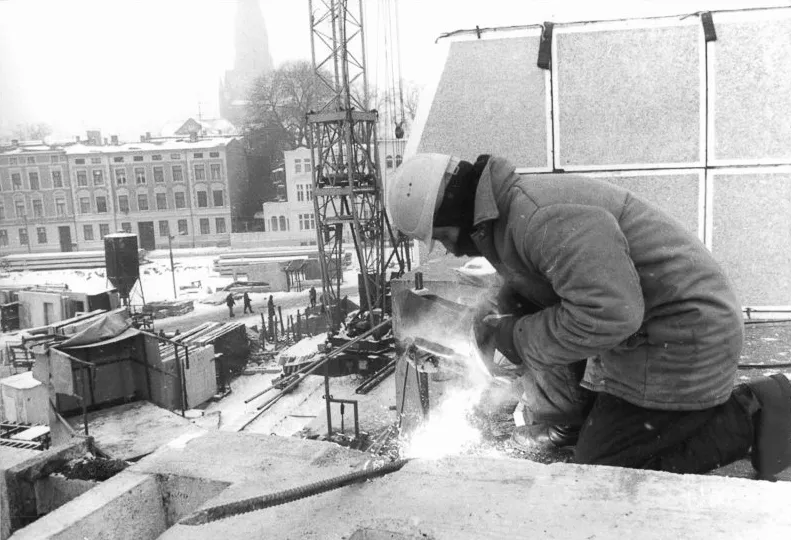
Photo: Wolfried Paetzold, CC BY-SA 3.0 de, via Wikimedia Commons
At 6:40 a.m. on a morning when the thermometer reads 9 degrees, most of Denver is still deciding whether to get out of bed. Marco Reyes is already on his second property, running a snow blower along a commercial parking lot in Aurora, his breath freezing on the scarf wrapped around his face.
"People think snow removal is the easy money," he says, taking a break to thaw his hands on the truck's heater. "It's not the snow. It's the cold between the snow. January has no mercy."
The Invisible Workforce
Denver's economy doesn't pause for weather, which means a rotating cast of outdoor workers doesn't get to either. Delivery riders navigating ice-slicked bike lanes. Valets standing in open-air pods downtown while diners take their time with dessert. Construction crews pouring concrete in conditions the manual says to avoid. Landscapers pivoting to snow contracts to bridge the winter income gap.
These workers share a body of knowledge the rest of us never develop — a kind of vernacular science of cold.
Gear Hacks From the People Who Know
Ask enough outdoor workers and a survival guide emerges, none of it sold at REI:
- The glove rotation. Keep three pairs going. One wet pair is how you lose a finger's worth of feeling by noon.
- The sock doctrine. One thick pair beats two compressed pairs. Circulation is warmth.
- The thermos economy. Coffee cools in twenty minutes. Soup doesn't. Veterans carry broth.
- The layer you forget. The one between your face and the wind. Balaclavas, neck gaiters, ski masks — whatever gets the job done.
- The boot cheat code. A handful of workers swear by sticking chemical toe warmers in their boots at 5 a.m., a trick they learned from a colleague, not a store.
One delivery rider, who asked to be identified only as J., described her setup like a race car driver describing a chassis: tuned, tested, non-negotiable. "My first winter I wore fashion gloves. I cried on the 16th Street Mall. Never again."
The Pay Structure Problem
Here's where it gets less cozy. Many of these jobs pay by the task, not the hour — a flat rate per delivery, per property, per shift. When cold slows you down, you earn less for suffering more. Piece rates and polar vortexes do not mix well.
Some companies add winter bonuses or weather holds; many don't. Independent contractors carry the full risk themselves, including the medical kind. Frostbite, hypothermia, and the long-term circulation damage that comes from years of cold exposure are occupational hazards nobody's workers' comp form quite knows how to name.
The Policy Slow Thaw
Colorado has heat rules on the books. Cold rules? That fight is just beginning. Worker advocacy groups have pushed for mandated warm-up breaks, employer-provided gear standards, and clearer rules about when outdoor work becomes unsafe — proposals that have met the usual resistance from industry groups worried about costs.
Workers themselves are skeptical but not hopeless. "Nobody gave us the heat rules either," Reyes shrugs. "Things change when people know what's happening to us. So tell them."
Consider yourself told. The next time your package arrives on a 15-degree morning, or your car gets pulled up warm and dry at a restaurant door, there's a person behind that convenience who has figured out something the rest of us haven't: exactly how much cold a body can take, and what it costs to find out.