Priced Out of the Job: Denver's Hospitality Workers Are Serving a City They Can No Longer Afford to Call Home

The brunch rush hits Cassandra Rivera every Saturday and Sunday between 10 a.m. and 2 p.m. She's been working those shifts at a well-regarded Capitol Hill restaurant for four years. She's good at her job — the kind of server regulars ask for by name, who remembers that the guy in the corner booth takes his coffee black and hates being asked how everything is tasting. She's also been driving in from Aurora for the last fourteen months, after her landlord converted her building to short-term rentals and offered her a buyout she couldn't afford to refuse.
"The commute is forty minutes on a good day," she says. "On a bad day, I'm spending an hour and a half in the car to work a six-hour shift. The math doesn't always make sense, but what's the alternative?"
Cassandra's situation isn't exceptional. It's Tuesday.
The Commute That's Becoming a Career Decision
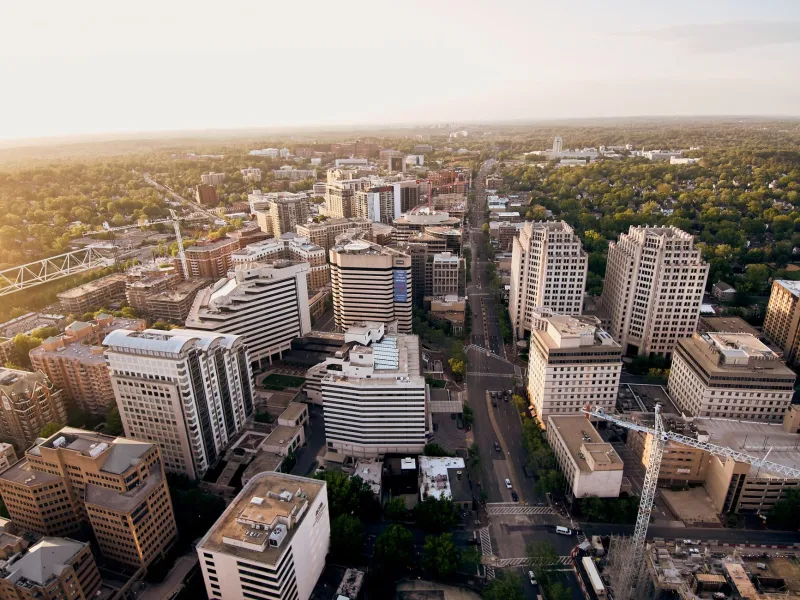
Across Denver's service industry — restaurants, hotels, retail, event venues — the displacement of workers from the neighborhoods where they work has accelerated significantly over the past four years. Average rent in Denver proper now exceeds $1,700 for a one-bedroom apartment, according to recent market data. For a full-time server averaging $18 to $22 per hour including tips, that's a significant portion of take-home pay before utilities, transportation, or anything else enters the equation.
The workers absorbing this pressure aren't the ones making headlines. They're not tech workers debating remote work policies. They're the people who have to physically be somewhere at a specific time, whose jobs don't have a work-from-home option, and whose commutes are therefore non-negotiable costs that compound with every mile they're pushed from the city center.
Marco Espinoza has worked hotel housekeeping in the LoDo area for six years. He lives in Commerce City now. Before that, he lived in Cole. Before that, he had an apartment in Five Points that he shared with two roommates, a fifteen-minute bus ride from work.
"Every time I move, the commute gets longer and the rent gets cheaper, but the rent savings don't cover what I'm spending to get to work," he says. "It's like a treadmill. You run faster and you stay in the same place."
What Leaves When the Workers Leave
The displacement of experienced service workers isn't just a housing equity story. It's a service quality story, and it's one that Denver's hospitality industry is beginning to feel in concrete ways.
Restaurant owners and hotel managers — several of whom spoke with us on background, reluctant to publicly criticize the city's economic trajectory — describe a retention crisis that's specifically concentrated among mid-career workers: the bartenders with five or six years of experience, the housekeepers who know the property well enough to train new hires, the servers who carry institutional knowledge about regulars and rhythms and the specific way a Saturday night crowd behaves.
These workers aren't entry-level and they're not management. They're the operational backbone of the hospitality industry, and they're increasingly making decisions about whether a Denver job is worth a Denver commute.
"I've had three bartenders leave in the past eighteen months," says one Capitol Hill bar owner who asked not to be identified. "Two of them took jobs in the suburbs because they could afford to live near those jobs. One of them just left the industry entirely. Replacing that experience is not something you can do quickly."
Coping Strategies and the Informal Economy of Survival
For workers who stay, the coping strategies are varied and often invisible to the employers and customers who benefit from them.
Room-sharing among adults who might, in a different economic moment, be living independently. Picking up shifts at multiple locations to maximize hourly earnings, which creates scheduling complexity that burns people out faster. Taking on gig work — delivery driving, rideshare — during off hours to cover gaps. Delaying or abandoning plans that previous generations of service workers in Denver could reasonably expect to pursue: savings accounts, car ownership, having kids.
Cassandra describes a group text with six other servers and bartenders from various Capitol Hill spots, coordinating shift coverage, sharing information about which landlords are manageable and which buildings to avoid, and occasionally pooling grocery runs to reduce the per-person cost of eating.
"We take care of each other because nobody else is doing it," she says simply.
This informal mutual aid network — and others like it throughout Denver's service industry — functions as a pressure valve for a system that's under serious strain. It also functions as a community, one that's increasingly stretched across a geography that makes in-person connection harder.
The Ripple Nobody's Measuring
There's a metric that Denver's hospitality industry talks about a lot: turnover rate. It's high, it's been high, and it's treated as a more or less permanent feature of the industry landscape.
What's harder to measure is what gets lost in that turnover — not just productivity and training costs, but the specific texture of service that comes from workers who know a place deeply, who know the regulars, who know the neighborhood. That texture is part of what makes a bar feel like a bar rather than a bar-shaped space.
Marco thinks about this sometimes while he's commuting back to Commerce City after a long shift. "I know that hotel better than most of the managers who've cycled through," he says. "I know where the pipes rattle, I know which rooms the guests complain about, I know how to fix things before they become problems. But nobody's asking me what I know. They're just hoping I keep showing up."
For now, he does. But he's also been looking at jobs closer to where he actually lives. The commute, he says, is starting to feel like a decision he didn't make.