Before It's Gone: The Denver Residents Racing to Save the Stories of a Changing City
The Album That Started a Movement
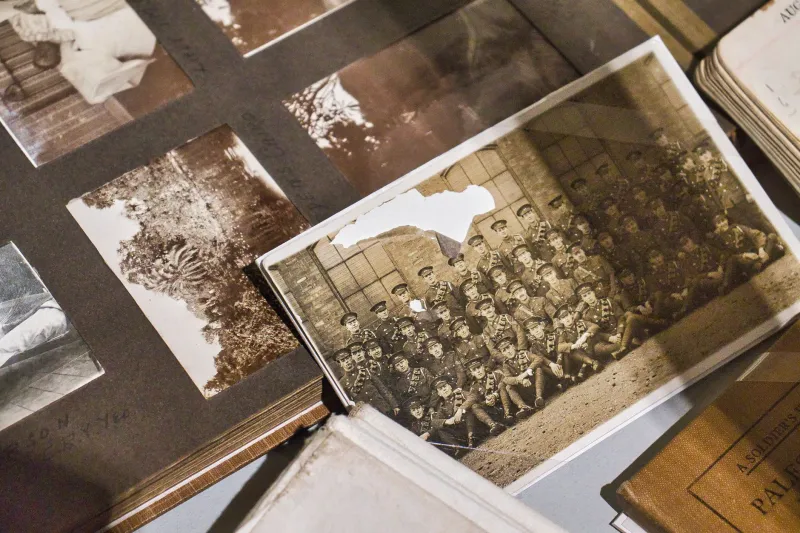
Lorraine Vásquez didn't set out to become a community archivist. She was just trying to find a photograph of the bakery her grandmother ran on Morrison Road in the 1970s.
What she found instead was a near-total absence. The bakery was gone — demolished sometime in the mid-nineties to make way for a parking lot that was itself eventually replaced by a storage facility. Her grandmother had passed. The neighbors who might have remembered were scattered. And the Denver Public Library's historical collections, while genuinely impressive in some areas, had almost nothing from that particular block during that particular era.
"It was like it never happened," Lorraine said. "Like my grandmother's whole life's work just... didn't leave a mark."
So she started leaving marks herself. She began interviewing elderly Westwood residents, recording their stories on her phone, scanning the photographs they kept in shoeboxes and plastic bins. She built a simple website. She started showing up at community meetings and asking people to share what they had. That was four years ago. Today, her archive contains more than 300 oral history recordings, several thousand photographs, and a growing collection of documents — menus, church bulletins, school newsletters, flyers for dances that happened fifty years ago — that would otherwise have no permanent home.
A City That Forgets on Purpose
Denver has always had a complicated relationship with its own history. The city's boosterish instinct — the relentless forward momentum that has driven growth through multiple boom cycles — tends to treat the past as something to be cleared away rather than built upon. Old buildings become development sites. Old neighborhoods become "emerging areas." Old communities become demographics to be managed or displaced.
This isn't unique to Denver. It's a pattern you see in fast-growing American cities from coast to coast. But Denver's particular version has some specific features that make community-driven documentation especially urgent.
The city's Latino communities — many of them rooted in neighborhoods like Westwood, Barnum, and the western stretches of what used to be called the West Side — have deep histories that predate most of the Anglo settlement that gets celebrated in official historical accounts. The same is true of Denver's Black communities in Five Points and Whittier, and the Indigenous communities whose relationship with this land goes back centuries before any of the city's founding stories begin.
For these communities, the erasure happening through gentrification isn't just economic displacement. It's a continuation of a much longer pattern of having their histories rendered invisible by the dominant narrative.
The Tools They're Using
What's striking about Denver's grassroots documentation movement is how low-tech most of it is. These aren't big-budget oral history projects funded by foundations or university grants — though a few have attracted modest outside support. Mostly, they're people with smartphones, flatbed scanners, and free cloud storage doing the work because nobody else is going to do it.
In Five Points, a retired postal worker named Gerald has spent the last three years photographing storefronts, murals, and residential buildings before they're demolished or renovated beyond recognition. He posts the photos to a neighborhood Facebook group and keeps full-resolution copies on an external hard drive that he backs up to a second external hard drive, because he doesn't entirely trust the cloud with something this important.
"The city has photographers," Gerald said. "They take pictures of the new stuff. The groundbreakings, the ribbon-cuttings, the 'revitalization.' I take pictures of what's here right now, before the revitalization comes for it."
In Globeville, a group of women who grew up in the neighborhood and mostly still live there have been conducting what they call "kitchen table interviews" — informal conversations with elderly residents that are recorded, transcribed, and stored in a shared Google Drive that any member of the group can access. The interviews cover everything from what the neighborhood smelled like before the I-70 expansion to which corner store gave kids credit when their parents were short.
Documentation as Resistance
It would be easy to frame all of this as nostalgia — people mourning what's lost and preserving memories for their own comfort. But the people doing this work push back hard on that framing.
"This isn't about being sad," said Rosa, who coordinates the Globeville kitchen table project. "This is about making sure that when someone tries to tell the story of this neighborhood twenty years from now, they can't just make it up. The record exists. We exist. You can't erase us if we've already documented ourselves."
That distinction — between preservation as mourning and preservation as power — is central to how many of these community archivists understand what they're doing. The archive isn't just a memorial. It's evidence. It's the foundation for future claims about who was here, what they built, and what the city owes them.
Some of these projects have already moved in that direction. Lorraine's Westwood archive has been cited in community meetings opposing certain development proposals, used to support arguments that the neighborhood's existing character deserves consideration in planning decisions. Gerald's photographs have appeared in media coverage of displacement issues in Five Points, giving faces and context to stories that might otherwise have remained abstract.
What the City Could Do (But Mostly Isn't)
Denver's official cultural institutions — the Denver Public Library, History Colorado, the Denver Art Museum — are not oblivious to these issues. There are people within those institutions who care deeply about community documentation and who have made genuine efforts to expand their collections to include underrepresented histories.
But institutional preservation moves slowly, requires resources that are always contested, and tends to operate on terms set by the institution rather than the community. The grassroots archivists filling the gaps aren't waiting for that process to catch up.
What they're asking for — when they ask for anything at all — is relatively modest: storage support, digitization equipment, help making their collections findable and durable. The kind of infrastructure investment that would cost the city relatively little but would make an enormous difference in whether these archives survive long enough to matter.
In the meantime, they're doing what Denver's communities have always done when the official systems fall short. They're handling it themselves, one recorded story at a time.