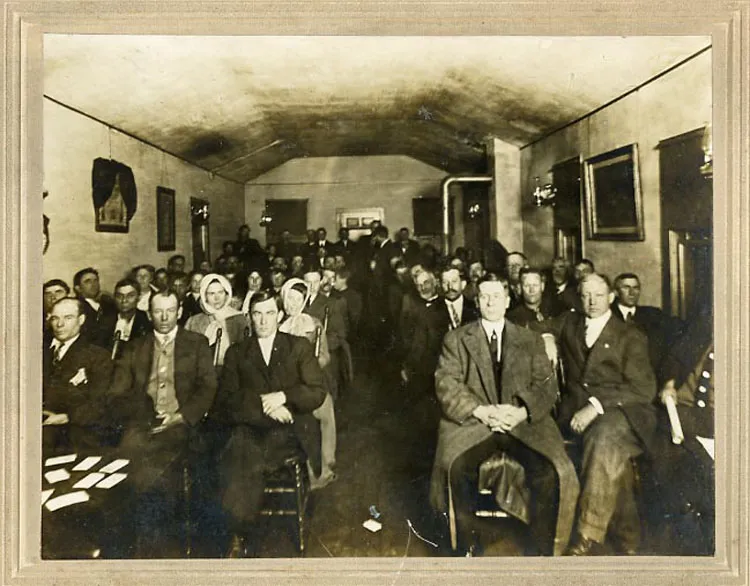
The Neighborhood Playbook Nobody Will Let You Read
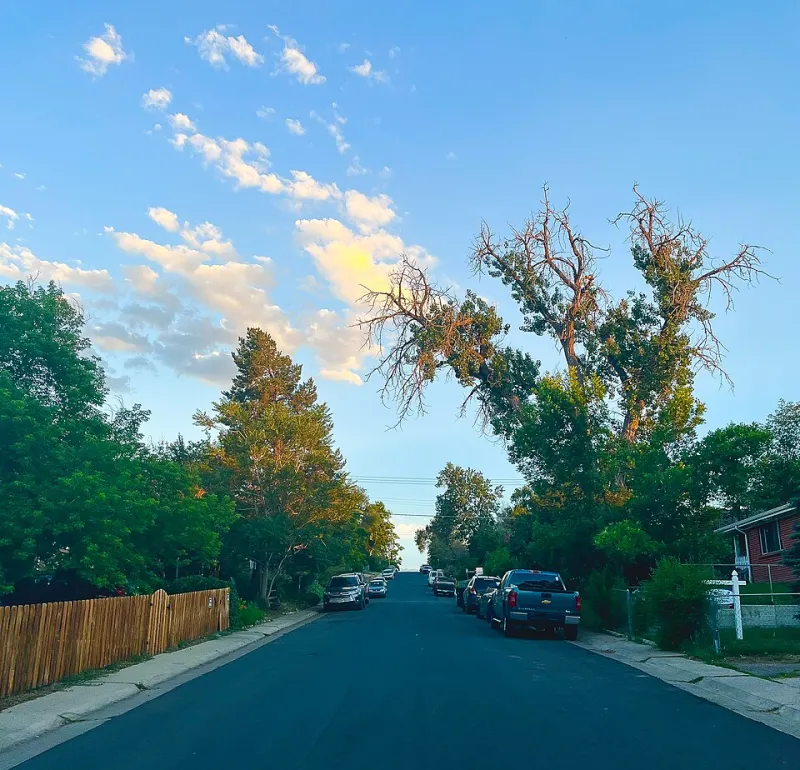
Photo: Bsweez, CC BY-SA 4.0, via Wikimedia Commons
There's a version of Denver that works really well. Walkable streets, thriving local businesses, engaged residents who actually show up to meetings, green space that gets used. You've probably driven through it. Maybe you've wished your block looked a little more like it. What you might not realize is that the people making it work have thought very carefully about who gets to know how they did it.
Call it the blueprint paradox. Denver's most successful neighborhoods are, in many ways, the city's best argument for intentional community building. They're also, quietly and sometimes not so quietly, some of its most effective gatekeepers.
What "Success" Actually Looks Like on the Ground
Spend any time talking to urban planners in Denver and you'll hear the same handful of neighborhoods cited as models — places where property values held steady without completely displacing longtime residents, where small businesses survived, where the sidewalks stayed full. The mechanisms behind that stability aren't always obvious from the outside.
Some of it is zoning. Certain neighborhoods spent years — in some cases, decades — cultivating relationships with city council members and planning departments that gave them disproportionate influence over land use decisions. They showed up. They organized. They built institutional knowledge about how to file comments, when to appeal, and which bureaucratic levers actually move things.
"There's a real skill set involved in navigating Denver's planning process," says one longtime community organizer who asked not to be identified by name. "And that skill set lives in certain neighborhoods and not others. It's not written down anywhere. You just kind of have to know people who know people."
That informal knowledge transfer — or lack thereof — is part of what keeps the playing field uneven.
The Informal Network Problem
Beyond zoning, a lot of what makes a Denver neighborhood tick comes down to relationships that don't show up in any official record. Who's connected to which developer. Which city official will actually return a call. Where the grant money is and who knows how to apply for it.
These networks form organically over time, and that's not inherently sinister. Communities that invested in relationship-building decades ago are now benefiting from those investments. The problem is that the networks are almost entirely self-referential. They grow by pulling in people who already have access, not by extending ladders to neighborhoods that are still figuring out the basics.
A Denver urban planner who works primarily with lower-income communities on the city's east side describes it bluntly: "I've been in rooms where people from [more established neighborhoods] are talking about their strategies, and it's genuinely impressive. They've got it figured out. But there's no mechanism for that information to flow anywhere else. It just... stays there."
When asked directly whether successful neighborhood associations ever actively share their models with struggling ones, the answer from multiple sources was some version of: not really, no.
Is This a Feature or a Bug?
Here's where it gets complicated. Some of the people who've built Denver's most functional neighborhoods will tell you — off the record, usually — that the insularity is at least partly intentional. Not out of malice, they'd insist, but out of self-preservation.
The logic goes something like this: the moment you publicize exactly how your neighborhood resisted a particular development, or which relationships made a rezoning fight winnable, you invite the same forces you were fighting to adapt their strategy. Developers have lawyers and lobbyists. Neighborhoods have volunteer boards and shared Google Docs. Operational secrecy, in that framing, is just asymmetric warfare.
There's something to that argument. But it also conveniently justifies a pattern that ends up concentrating resources and influence in communities that already have both.
"You can understand why they do it and still recognize that the effect is to widen the gap," says a researcher at a Denver-based housing policy nonprofit. "The neighborhoods that most need to learn from the successful ones are the least likely to get that knowledge transferred to them."
The City's Role — and Its Limits
Denver's city government has made periodic attempts to bridge this gap. Neighborhood planning initiatives, community liaison programs, equity-focused grant structures — the policy infrastructure exists, at least on paper. The execution is a different story.
Several community leaders in historically underinvested neighborhoods describe a pattern where city-run programs introduce them to frameworks and tools that the more established neighborhoods have been using informally for years. By the time the official curriculum catches up, the successful neighborhoods have already moved on to the next level.
"It's like being handed a map to a city that's already been redeveloped," says one RiNo-adjacent resident who's watched the neighborhood's identity shift dramatically over the past decade. "The directions are technically accurate. They're just about ten years too late."
City officials, for their part, tend to frame the disparity as a resource issue rather than a knowledge issue — which may be accurate, but also sidesteps the structural question of why certain communities accumulated the resources to build these networks in the first place.
What Would Actually Help
The people closest to this problem don't have a clean solution, but they have some ideas. A few recurring themes came up across conversations: peer-to-peer programming that puts neighborhood leaders from different parts of the city in direct, sustained contact (not just a one-off summit); city incentives that reward established neighborhoods for actively mentoring less-resourced ones; and more transparent documentation of what's actually worked, housed somewhere publicly accessible rather than locked in the institutional memory of a handful of longtime volunteers.
None of those things are particularly radical. What they require is a willingness from Denver's most successful neighborhoods to treat their hard-won knowledge as a public good rather than a competitive advantage.
Whether that willingness exists is, at this point, an open question.
The Bigger Picture
Denver is a city that talks a lot about equity and community investment. The gap between that rhetoric and the reality of how neighborhood power actually works is one of the more honest measures of where the city stands. Some communities have the playbook. Most don't. And the playbook isn't in any library.
Until the information flows more freely — until the neighborhoods that have figured it out decide that sharing the recipe is worth more than hoarding it — Denver's development story is going to keep looking like what it already is: a handful of places that work, surrounded by a lot of places still waiting to find out how.