The Open Secret: Why Denver Locals Guard Their Favorite Places Like Family Heirlooms
There's a taqueria on the west side of Denver that doesn't have a Yelp page, barely has a sign, and if you ask certain longtime residents about it, they'll smile, look slightly to the left, and say something like, "Oh yeah, it's great," while giving you absolutely zero additional information. You are not getting the address. You have not earned the address.
This is Denver's open secret — and it's been hiding in plain sight for years.
The Gatekeeping Gospel
Ask around long enough and you'll find that this kind of protective instinct runs deep in the city's social fabric. Denver has always had a complicated relationship with its own growth. Longtime residents watched RiNo go from industrial ghost town to Instagram backdrop. They saw the craft beer scene scale from scrappy neighborhood taprooms to nationally distributed brands. They watched neighborhood dive bars shutter to make room for rooftop cocktail lounges that charge $18 for something with a flower in it.
So when a local finds something that still feels real — still feels theirs — the reflex is to hold it close.
"I've been going to the same breakfast spot in Globeville for eleven years," says Marcus, a Denver native who works in construction and asked that his last name not be used. "The moment it shows up on some 'hidden gems' list, it's over. I've seen it happen. The prices go up, the vibe changes, the regulars stop coming. I'm not doing that to them."
His logic is hard to argue with on the surface. The gentrification-by-exposure pipeline is real and well-documented in Denver. Attention, even positive attention, can functionally destroy the thing it's celebrating.
What's Actually Being Protected
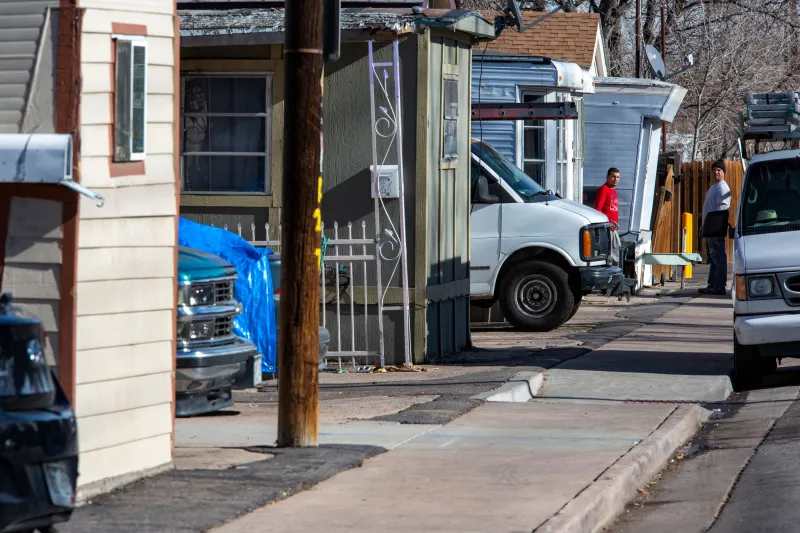
But here's where it gets complicated. The places that get this kind of fierce protection aren't random. They tend to be businesses owned by people of color, immigrant families, or working-class Denverites who built something without the benefit of marketing budgets or venture capital. The Globeville breakfast spot. The Vietnamese sandwich counter in Federal Heights. The Chicano art studio that operates out of what looks like a converted garage because it basically is.
These places survive on community loyalty. And community loyalty, in Denver's case, sometimes looks like a deliberate information blackout.
Elena Reyes, who runs a small ceramics studio and gathering space in the Barnum neighborhood, has mixed feelings about it. "On one hand, I get it — the people who come here now, they're my people. They know what this space is for. They're not treating it like a content opportunity," she says, laughing a little. "But I also can't pay my rent on loyalty alone. At some point, I need new customers. I need people who don't already know me."
That tension — between preservation and sustainability — is where Denver's gatekeeping culture starts to crack under pressure.
The Newcomer Problem
For people who've moved to Denver in the last five years, navigating this unwritten social code can feel genuinely alienating. The city markets itself aggressively — the mountains, the sunshine, the food scene, the culture — and then delivers a kind of social frostiness that nobody warned you about in the relocation brochure.
"I've lived here three years and I still feel like I'm on the outside of something," says Priya, a software developer who relocated from Austin. "People are friendly, but there's this layer you can't quite get through. Like there's a Denver that exists that I don't have access to yet, and I don't know how to get there."
What Priya is describing isn't unique to Denver, but it does feel particularly pronounced here. The city's rapid growth — it added hundreds of thousands of residents in the span of a decade — created a kind of siege mentality among people who were already here. When your city changes faster than you can process it, protecting small pockets of the old version starts to feel like an act of resistance.
The problem is that resistance has collateral damage.
When Secrecy Becomes Exclusion
There's a version of this gatekeeping that's genuinely community-protective. And then there's a version that functions as exclusion dressed up in nostalgia.
Denver's unwritten social hierarchies — who's a "real" local, who's a transplant, who gets the address and who doesn't — tend to break along lines that aren't always comfortable to examine. Longtime residents who are white and middle-class often get the insider pass faster than longtime residents who are Black, Latino, or working-class. Newcomers with cultural capital and the right aesthetic references crack the code more easily than newcomers who don't.
"The gatekeeping isn't neutral," says Dr. Amara Osei, a community sociologist who has studied Denver's neighborhood dynamics. "It feels like it's about authenticity, but authenticity is often a proxy for familiarity. And familiarity has its own biases built in."
That's a harder conversation than most people want to have about their favorite taco spot. But it's worth having.
Can a City Keep Its Soul Without Closing the Door?
The real question Denver is wrestling with — whether its residents know it or not — is whether authenticity requires secrecy, or whether it's actually more durable than that.
Elena Reyes thinks about this constantly. She's started hosting open studio nights, deliberately inviting people who've never heard of her space and wouldn't have found it otherwise. "I'd rather shape what growth looks like here than just hope nobody notices us," she says. "Because they will eventually. They always do."
Marcus, the construction worker from Globeville, is less optimistic but not entirely closed off. "Maybe there's a way to share something without losing it," he says. "I just haven't seen a lot of examples of that working out."
He might be right. Or he might be holding onto a version of Denver that's already changed more than he's willing to admit.
Either way, the taqueria on the west side is still there. Still no sign. Still no Yelp page. Still worth finding — if you can figure out how.