Rent Rolls and Regret: Denver's Long-Haul Landlords Reckon With the City They Helped Shape
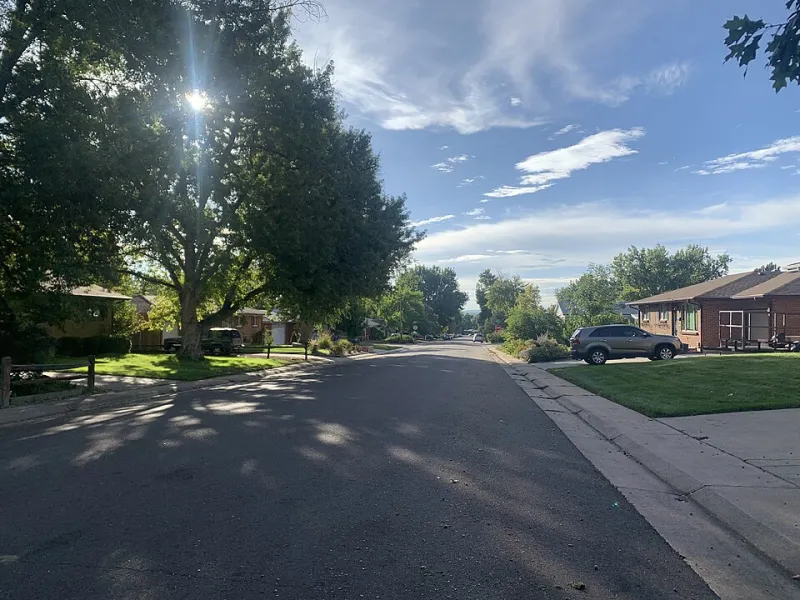
Photo: SamuelNelsonGISP, CC0, via Wikimedia Commons
There's a version of the gentrification story you've heard a hundred times. The displaced tenant, the shuttered barbershop, the mural painted over for a kombucha bar. It's a real story. It deserves to be told. But there's another character in that narrative who almost never gets asked to sit down for an interview — the landlord who's been holding the building through all of it.
Not the hedge fund. Not the out-of-state LLC that swooped in after 2015. The person who bought a duplex in Globeville in 1987, or inherited a commercial strip in Sunnyside from their parents, or saved up for years to grab a fourplex in Elyria-Swansea before anyone was calling those neighborhoods by their full names.
Some of them held rents steady for decades. Some of them didn't. And the ones willing to talk about it are telling a story about Denver that's messier — and more honest — than either side of the usual debate tends to admit.
The Long View From the Property Line
Maria T. has owned a six-unit building in the Globeville neighborhood since 1991. She asked that her last name not be used because, as she puts it, "I don't want to be anyone's villain or anyone's hero. I'm just a person trying to figure it out."
For most of the '90s and early 2000s, her tenants were longtime Denver residents — working families, a few seniors on fixed incomes, a guy who fixed HVAC units and paid his rent in cash on the first of every month without fail for eleven years. She kept rents low because, she says, the market didn't demand anything else and she wasn't trying to get rich off the building. She was trying to hold onto it.
"When the assessments started going crazy — I'm talking 2017, 2018 — my property taxes nearly doubled in two years," she said. "At that point, I had a choice. Raise rents or sell. And I didn't want to sell."
She raised rents. Not to market rate, she's quick to clarify, but enough to cover the new reality of owning property in a city that had decided, seemingly overnight, that her neighborhood was desirable. Two of her long-term tenants left. She still thinks about them.
The Ones Who Held the Line
Not everyone made the same call. Ray K., who owns a small commercial building on Tennyson Street in Berkeley, watched the block transform around him while he kept his anchor tenant — a neighborhood alterations shop that's been there since the Clinton administration — at a rent that hasn't moved in eight years.
"That shop is the reason people still feel like that block has a soul," he said, sitting outside the building on a Tuesday afternoon while a steady stream of people walked in and out with garments draped over their arms. "I could get three times the rent if I put in a juice place or whatever. But then what? Then I'm just another guy who turned a neighborhood into a theme park."
Ray is not unaware of the financial math he's leaving on the table. He's also not pretending the decision is purely altruistic. He owns other properties. He has flexibility. He acknowledges, without much prompting, that the ability to hold the line on rent is itself a privilege — one that not every small landlord can afford.
"I'm not a saint. I just happened to be in a position where I could make a different choice," he said. "I think a lot of landlords who raised rents weren't evil. They were scared. The city made it very expensive to own property here, and nobody really helped them figure out another way."
When the Map Gets Redrawn
What's striking, when you talk to enough of these long-term property owners, is how clearly they understand — often better than any policy paper could articulate — the direct line between their individual decisions and the demographic shape of their neighborhoods.
One landlord who owns several residential units in Cole put it bluntly: "Every time I raised rent, I was making a decision about who could live here. I knew that. You can't not know that."
That kind of moral clarity doesn't always translate into different behavior. The pressures are real — rising insurance costs, maintenance on aging buildings, property tax assessments that seem to arrive like jump scares every couple of years. Denver's small landlords, particularly those who bought before the boom, often find themselves caught between the rising cost of ownership and a genuine reluctance to displace the people who made their buildings feel like home.
Some have sold outright, cashing out to developers or investors who have no such reluctance. Others have converted rentals to short-term vacation listings. A few have tried creative arrangements — longer lease terms, rent-to-own agreements, informal deals that exist somewhere in the gray zone between charity and contract.
The Accountability Gap
What's largely missing from Denver's housing conversation, several landlords pointed out, is any real mechanism that rewards the owners who choose restraint. There are no meaningful tax incentives for keeping below-market rents. There's no city program that helps small landlords absorb rising property taxes without passing costs to tenants. The policy landscape, as one owner described it, is essentially "hold on or sell out, and good luck figuring out which one you're doing."
Colorado's prohibition on rent control — which prevents Denver from capping what landlords can charge — is part of the picture. But the landlords who feel the tension most acutely aren't necessarily asking for rent control. They're asking for something that would make the ethical choice less financially punishing.
"I don't think most people who own a building in this city are monsters," said Maria. "I think most of us got caught in a system that moved faster than we could think clearly about what we were doing. And by the time we figured it out, the neighborhood had already changed."
Stories the Deed Doesn't Show
Property records are public. You can look up who owns what, when they bought it, what they paid. What you can't find in any database is the conversation a landlord had with a tenant before deciding whether to renew a lease. The moment someone chose not to raise rent because they'd watched that family grow up in the building. Or the moment someone did, because they were terrified of losing the building entirely.
Denver's transformation has been documented in displacement statistics, in rezoning maps, in the slow erasure of neighborhood commercial corridors. But some of the most consequential decisions about who gets to stay and who gets pushed out were made quietly, in spreadsheets and phone calls and kitchen-table conversations between people trying to figure out what kind of city they wanted to live in — and what kind of person they wanted to be.
The landlords who are willing to talk about it aren't looking for absolution. Most of them seem to be working something out, still, even years after the decisions were made. That's not nothing. In a city that tends to flatten its own complexity into a clean narrative of winners and losers, it might actually be something worth listening to.