Where Did Everybody Go? Denver's Vanishing Gathering Spots and the Community Paying the Price
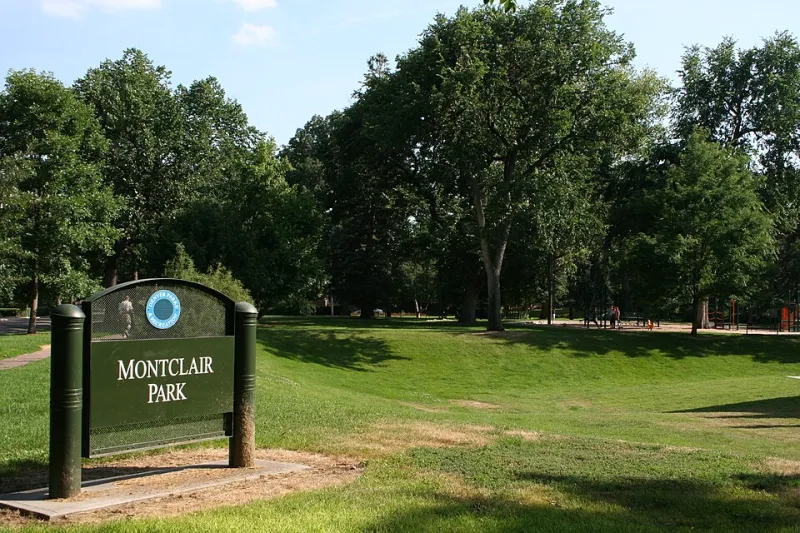
Photo: Jeffrey Beall from Denver, Colorado, USA, CC BY-SA 2.0, via Wikimedia Commons
There's a concept in urban sociology called the "third place" — not home, not work, but that in-between space where community actually happens. The barbershop. The corner bodega. The park bench where the same retired guys played chess every Tuesday. The rec center lobby that smelled like chlorine and old carpet and somehow always felt like somewhere.
Denver had a lot of those places. It's losing them faster than most people want to admit.
Over the last decade, the city has transformed at a pace that's been equal parts exciting and disorienting. New residents have poured in. Cranes have become a permanent feature of the skyline. Neighborhoods that once had a slow, lived-in rhythm now move at a different tempo entirely. And somewhere in the middle of all that growth, the informal gathering spots — the ones that didn't have a marketing budget or a branded aesthetic — quietly disappeared.
The Geometry of Connection
Ask longtime Denver residents where they used to spend unstructured time, and you'll get answers that feel almost quaint by today's standards. A hardware store in Globeville where the owner knew every customer by name. A park in Westwood that doubled as an unofficial community hub on weekends. A dive bar in Capitol Hill that hosted the same crowd for twenty years before the building sold.
"Those places weren't destinations," says Maria Sandoval, a community organizer who has lived in the Barnum neighborhood for over three decades. "You didn't plan to go there. You just ended up there, and you'd run into people, and that's how you knew what was happening in the neighborhood. That's how you knew if someone needed help."
That kind of spontaneous, low-stakes connection is precisely what urban planners mean when they talk about social infrastructure. And it's exactly what gets bulldozed — sometimes literally — when a city prioritizes density metrics and commercial revenue over the messier, harder-to-quantify needs of the people already living there.
Denver's Office of Community Planning and Development has acknowledged the tension in recent public forums. The city's comprehensive plan pays lip service to "complete neighborhoods" and "equitable access to amenities," but critics argue the implementation keeps defaulting to the same formula: mixed-use developments with ground-floor retail that prices out the corner stores it was supposedly designed to replace.
The Instagram Problem
Here's where it gets complicated. Denver isn't short on new social spaces. If anything, the city has more curated gathering spots than ever — rooftop bars in RiNo, community-focused coffee shops in Five Points, maker spaces in the Highlands, pop-up markets in Sunnyside. There's a version of the story where Denver is thriving, where third places are multiplying, where community is being built one beautifully designed interior at a time.
But spend some time in those spaces and a pattern emerges. They're optimized for a certain kind of person, a certain kind of interaction. The unspoken entry fee — a $7 latte, the right aesthetic sensibility, a comfort with being photographed — filters the crowd in ways that feel invisible until you're on the outside of them.
"I'm not saying those places aren't real community," says James Okafor, an urban planning graduate student at the University of Colorado Denver who's been researching social infrastructure gaps in lower-income Denver neighborhoods. "But there's a difference between a space that was built for community and a space that was built for a specific demographic that happens to gather there. The first one is inclusive by design. The second one just looks inclusive on Instagram."
Okafor's research points to a geographic disparity that's hard to ignore. The proliferation of intentional social spaces has been heavily concentrated in Denver's whiter, wealthier, and more recently gentrified neighborhoods. Meanwhile, communities in Montbello, Globeville, Elyria-Swansea, and parts of the far northeast — neighborhoods that were never prioritized for amenities to begin with — have seen their informal gathering infrastructure erode without much replacing it.
What's Actually Being Built
It would be unfair to say nothing is working. There are genuine bright spots.
The Denver Public Library system has quietly become one of the most important third-place networks in the city, with branches functioning as de facto community centers in neighborhoods that don't have much else. Several parks in lower-income areas have received meaningful investment through the Denver Parks and Recreation master plan. Community land trusts and neighborhood organizations in Globeville and Swansea have been fighting — with some success — to preserve affordable commercial space that keeps local-serving businesses viable.
And there are smaller, scrappier efforts that don't make the press releases. A front porch in Cole that became a weekly neighborhood gathering spot. A church parking lot in Westwood repurposed for a Saturday market that's been running for years. A community fridge network that started as a pandemic response and quietly became a social hub.
"The community is always building its own spaces," Sandoval says. "The question is whether the city gets out of the way and lets it happen, or whether development pressure makes it impossible."
The Cost of Losing the Corners
Social isolation isn't an abstract concern. Study after study links the erosion of informal community infrastructure to measurable declines in mental health, civic participation, and neighborhood resilience. When people don't have places to casually encounter their neighbors, they stop knowing them. When they stop knowing them, the social fabric that makes a neighborhood actually function — the mutual aid, the collective accountability, the sense of shared stake — starts to fray.
Denver is a city that markets itself on outdoor lifestyle, community spirit, and quality of life. Those things don't sustain themselves. They require places where people can show up without an agenda and leave knowing someone a little better than before.
The corner store that became a condo. The rec center that lost its funding. The park that got redesigned for aesthetics and somehow stopped feeling like anywhere anyone wanted to linger.
The city isn't short on ambition. Whether that ambition leaves room for the unglamorous, unbranded, un-photographable spaces where community actually lives — that's the question Denver hasn't figured out how to answer yet.