Great Ideas, Dead Ends: How Denver Keeps Losing Its Own Best Thinking
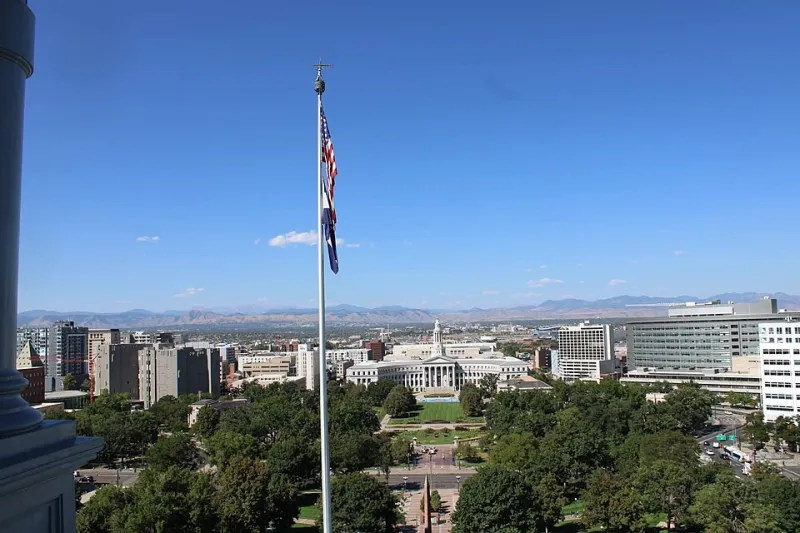
Photo: ALindgren74, CC BY 4.0, via Wikimedia Commons
There's a particular kind of frustration that settles in when you've sat through your fourth city council meeting in three months, watched your proposal get tabled again, and driven home past the exact problem your idea was supposed to fix. Ask around Denver's community organizing circles, and you'll hear that story told in a dozen different voices, with a dozen different details — but almost always the same ending.
The city has no shortage of people with genuinely good ideas. What it seems to have a shortage of is a reliable mechanism for turning those ideas into anything real.
The Gap Nobody Wants to Own
Denver has grown fast — faster, in many ways, than its civic infrastructure was built to handle. Between 2010 and 2020, the city's population swelled by nearly 20 percent. New neighborhoods materialized. Old ones transformed almost overnight. And somewhere in the middle of all that momentum, the feedback loop between residents and city government started showing some serious cracks.
"The city has gotten bigger, but the process for engaging with it hasn't really scaled," says Marisol Reyes, a community organizer who has worked in the Globeville and Elyria-Swansea neighborhoods for the better part of a decade. "You still have to show up in person, fill out the same forms, wait for the same meetings. Meanwhile, the problems are getting more complex and the timeline keeps moving."
That disconnect — between the pace of the city's growth and the pace of its bureaucratic response — is at the heart of what a lot of frustrated Denverites are calling the blueprint problem: the moment when a well-developed, community-backed idea hits the machinery of municipal process and simply stops moving.
Case Study One: The Micro-Transit Pilot That Went Nowhere
In 2021, a coalition of residents and small-business owners in the Sun Valley neighborhood proposed a neighborhood-level shuttle system — essentially a low-cost, on-demand micro-transit loop that could connect residents to the light rail without requiring a car. They had funding interest from two local foundations, a route plan developed with input from over 200 residents, and preliminary conversations with a mobility startup willing to provide vehicles at reduced cost.
They submitted their proposal to the city's Department of Transportation and Infrastructure. What followed was eighteen months of back-and-forth over liability frameworks, ADA compliance reviews, and jurisdictional questions about whether the city or RTD had authority over the corridor. By the time the review process wound down, the foundation funding window had closed and the mobility startup had pivoted to a different market.
"We weren't asking for anything radical," says one of the coalition members, who asked not to be named. "We were asking the city to let us solve a problem they hadn't solved. And the answer was basically: we'll get back to you."
A city spokesperson, when asked about the proposal, said the department "remains committed to exploring innovative mobility solutions" and noted that any pilot program requires thorough vetting to protect public safety. That's not wrong. But it doesn't explain why the vetting took longer than the funding window.
Case Study Two: The Vacant Lot That Almost Became Something
In the Cole neighborhood, a group of residents spent the better part of two years developing a plan to convert a city-owned vacant lot into a combination community garden and small-event space. They organized volunteer labor, secured in-kind donations from local nurseries, and worked with a landscape architecture student at CU Denver to draw up plans that met city code.
The proposal cleared initial review. Then it hit the Office of Economic Development, which flagged the lot as a potential site for future affordable housing development. That's a legitimate concern — Denver's housing crisis is real and urgent. But the lot had sat vacant for eleven years. And the residents' proposal explicitly included provisions to vacate the space if housing development was ever formally approved.
Two years later, the lot is still empty. No housing project has been initiated. The community garden never happened.
"It's not that the city made the wrong call," says longtime Cole resident and small-business owner Derek Winslow. "It's that they made no call. They just... held it. And we lost two years of something good while they figured out what they wanted to do with something they hadn't touched in a decade."
Case Study Three: The Cultural Corridor That Got Rezoned Into Irrelevance
In the Santa Fe Arts District, a group of gallery owners, artists, and event producers spent years building a proposal for a designated cultural corridor — a zoning classification that would have offered some protection against the commercial displacement that's been steadily pushing artists out of the district they helped build.
The proposal had broad support. It had a precedent in cities like Portland and Pittsburgh. It had a city council member willing to champion it. What it didn't have, ultimately, was enough traction against the competing interests of developers who preferred the flexibility of current zoning.
The cultural corridor designation was never formally rejected. It was revised, workshopped, tabled, revised again, and eventually absorbed into a broader arts and culture strategic plan that acknowledged the problem without solving it.
"At some point, process becomes a substitute for action," says one gallery owner who was involved in the effort from the beginning. "You feel like you're making progress because there are meetings. But the meetings are the product. Nothing else comes out."
What City Officials Actually Say
To be fair, the people inside city government aren't indifferent to this problem. Several officials, speaking on background, acknowledged that the permitting and review infrastructure hasn't kept pace with the volume and complexity of community proposals coming in. One planner described the situation as "trying to run modern software on old hardware."
There are also legitimate reasons why some proposals stall. Liability, equity review, environmental impact, and budget constraints are real considerations — not just bureaucratic cover. The city can't simply greenlight every community idea, and some proposals that feel urgent at the neighborhood level create complications that aren't immediately visible to the people proposing them.
But here's the thing: Denver residents generally understand that. What they're less willing to accept is a process that offers engagement without accountability — one where showing up and doing the work doesn't meaningfully increase the odds of something actually happening.
The Bigger Question
What Denver seems to be missing isn't creativity or civic energy. Walk into any neighborhood meeting, any community workshop, any informal gathering of locals who care about their block, and you'll find both in abundance. What's missing is a faster, more transparent pathway for converting that energy into action — something that doesn't require residents to essentially become full-time advocates just to get a vacant lot turned into a garden.
Other cities have experimented with participatory budgeting, innovation offices with real authority to greenlight pilots, and streamlined permitting tracks for community-sponsored projects. Denver has talked about some of these things. A few small-scale experiments have launched. But the gap between pilot and policy remains wide.
For now, the blueprints keep accumulating. And the problems they were designed to solve keep waiting.
Got a proposal that stalled out? We want to hear about it. Reach out to us at denverpostbloghouse.com.