Who's Really Running Your Block? Inside Denver's Shadow Government of Neighborhood Associations
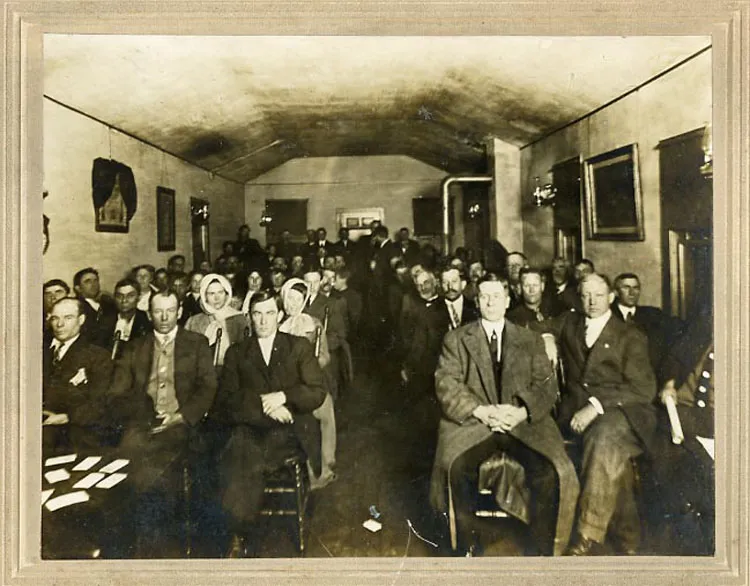
Photo: Unknown, Public domain, via Wikimedia Commons
Attend enough Denver City Council meetings and you'll notice something curious. Before nearly any significant zoning change, development proposal, or land-use debate reaches the official chambers, it's already been filtered — argued over, blessed, or quietly killed — somewhere else entirely. In a church basement in Sunnyside. Around a folding table in Park Hill. Over bad coffee in a Berkeley rec center on a Tuesday night that maybe forty people knew about.
Denver's neighborhood associations have become something the city never formally designed them to be: a parallel layer of governance that holds real influence over how this city grows, changes, and decides who belongs in it.
The Unofficial Veto
There are roughly 80 registered neighborhood organizations in Denver, each operating under the city's Neighborhood Organization Recognition Program. Registration grants them something valuable — an official channel to weigh in on development applications, zoning variances, and planning decisions. City planners are required to notify recognized groups when projects come up in their boundaries. That notification often translates into testimony, letters of support or opposition, and the kind of organized political pressure that developers and council members pay close attention to.
"We don't have a legal veto," says one longtime block captain in the Whittier neighborhood who asked to remain unnamed because of ongoing disputes with a local developer. "But when we show up unified and loud, things tend to go our way. And when we don't, they don't. That's basically a veto."
City planners acknowledge the dynamic, even if carefully. "Neighborhood input is a core part of how we do planning in Denver," one senior planner with the city's Community Planning and Development department said. "We want residents at the table. But the question of which residents get to that table — that's a real and ongoing challenge."
Who Gets a Seat
Here's where the story gets complicated. Most Denver neighborhood associations are technically open to any resident within their boundaries. Show up to the meetings, pay a nominal dues fee in some cases, and you're in. The democratic framework is there on paper.
But in practice, these organizations tend to reflect a very specific slice of the communities they represent. They skew older, whiter, and toward homeowners rather than renters. In a city where nearly half the population rents, that's a significant structural gap.
Marisol Reyes, a renter who's lived in Globeville for eleven years, tried attending her area's neighborhood association meetings after a large mixed-use development was proposed near her street. She went twice. "The meetings were in English only, held on a weeknight when most of my neighbors were still working second shifts, and the agenda was already pretty much set before anyone in the room said a word," she says. "I didn't go back. What was the point?"
This isn't a Globeville-specific problem. Community organizers across the city describe similar patterns — meetings that function less like open forums and more like insider confirmation sessions, where decisions have effectively been pre-negotiated among a core group of regulars.
Property Values vs. Community Character
The most pointed criticism of Denver's neighborhood association structure is that it conflates two things that aren't always the same: protecting community character and protecting property values. The interests overlap — but not always, and not for everyone.
Opposition to new housing density, for instance, is often framed in terms of neighborhood feel, traffic concerns, or historic preservation. Those arguments aren't always wrong. But they also have a documented track record of correlating with keeping housing supply tight and home values high — which benefits owners and disadvantages renters, newcomers, and lower-income families trying to stay in the city.
"I've been in rooms where the conversation about a proposed affordable housing development was dressed up as being about parking and building height," says one Denver-based housing advocate who works with several community land trusts. "But everyone in that room knew what it was really about. And the people most affected by that decision weren't in the room at all."
To be fair, neighborhood associations have also fought genuinely good fights — blocking predatory commercial developments, preserving historic buildings, pushing back on infrastructure projects that would have damaged local quality of life. The picture isn't cleanly villainous. It's messier than that.
The Insiders' Perspective
Long-tenured association leaders tend to push back on the shadow government framing. Hard.
"We're volunteers," says one block captain who's led a northwest Denver association for over a decade. "Nobody's paying us. We're not drawing a salary or making backroom deals. We're just people who care enough about where we live to show up consistently, which is more than most people do." He has a point. Civic participation requires time, and time is not equally distributed. The people who show up most consistently to neighborhood meetings are, almost by definition, the people with the most flexibility in their schedules.
But that structural reality doesn't make the power imbalance less real. It just explains how it got this way without requiring anyone to be a villain.
What Reform Could Look Like
Some cities have experimented with restructuring how neighborhood input gets weighted in planning decisions — requiring demographic data from participating organizations, mandating multilingual outreach, or creating separate engagement pathways for renter communities. Denver has made some moves in this direction, including expanded outreach requirements for certain types of development applications.
Whether those reforms are keeping pace with the actual influence neighborhood associations have accumulated is a different question. Several city council members, speaking informally, acknowledged that organized neighborhood opposition can be politically difficult to override — even when the planning merits favor a project.
"There's a reason developers spend time working the neighborhood association circuit before they ever file a formal application," one council aide said. "It's not because they have to. It's because they've learned that it's easier than fighting that battle later."
Ground-Level Power
Denver has always been a city that talks a good game about community. The neighborhood association system, at its best, is a genuine expression of that — residents taking ownership of their streets, their blocks, their shared spaces. That matters. It's real.
But a system built on voluntary participation, without structural safeguards for inclusion, tends to amplify the voices of those already positioned to be heard. In a city undergoing the kind of rapid demographic and economic change Denver has experienced, that amplification has consequences.
The people who show up to those Tuesday night meetings aren't doing anything illegal. In many cases, they're doing something admirable. But the city that gets shaped by those meetings — the zoning decisions, the development approvals, the quiet preservation of certain blocks over others — belongs to everyone who lives here. Not just the ones who knew the meeting was happening.
That gap, between who holds the informal power and who bears the consequences of how it's used, is the real story underneath Denver's neighborhood association system. And it's one the city hasn't fully figured out how to tell yet.