The Trade You Never Got to Learn: Denver's Informal Knowledge Economy Is Filling a Serious Gap
Saturday Morning, Somebody's Garage, Englewood
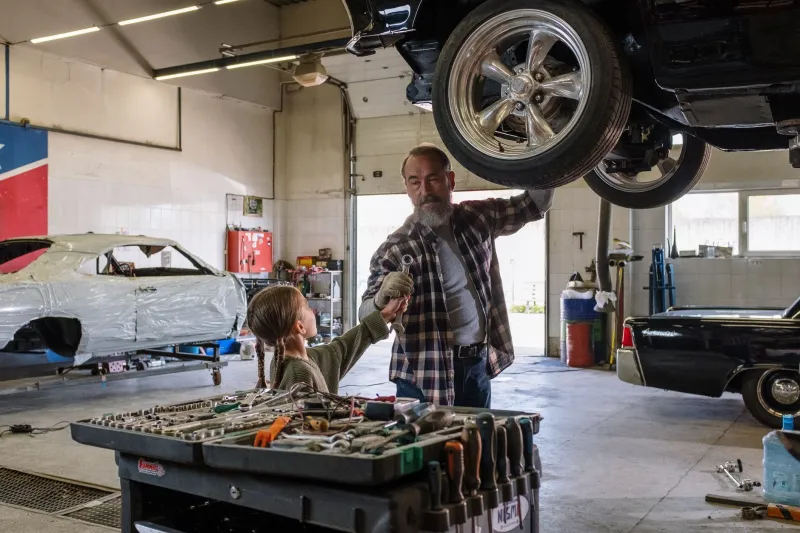
By 9 a.m., there are six people crowded around a workbench that wasn't designed for six people. A retired electrician named Marcus is explaining how to read a circuit diagram. Two of his students are recent immigrants who picked up framing work but want to move into electrical. One is a single mom trying to cut down on contractor bills. One is a twenty-three-year-old who dropped out of a trade program because he couldn't afford the materials fees. And one is Marcus's neighbor, who showed up because he heard something interesting was happening and brought donuts.
There is no curriculum. There are no certificates at the end. Marcus doesn't charge anything, though people tend to bring things — food, coffee, occasionally help with his yard. This is not a program. It's just Marcus, sharing what he knows, because he figures the city will be better off if more people understand how electricity works.
This kind of thing is happening all over Denver. And it's becoming a meaningful piece of how people in this city access skills, knowledge, and economic opportunity.
Why the Formal Systems Aren't Cutting It
Colorado has genuine workforce shortages in the trades. HVAC, plumbing, electrical, carpentry — the demand for skilled workers outpaces the supply in ways that affect everyone from homeowners trying to get a quote to contractors trying to staff a job site. The official response to this problem involves workforce development programs, expanded apprenticeship pipelines, and community college partnerships. All of which are real, and all of which have significant limitations.
Apprenticeship programs are largely controlled by unions and large contractors, and while union membership comes with serious benefits, the path in isn't always straightforward — especially for people without existing connections in the trades. Community college programs, meanwhile, have seen enrollment surge post-pandemic, which sounds like good news until you realize it means waitlists that can stretch a year or more for high-demand programs.
For someone who needs skills now — who's trying to switch careers, supplement their income, or simply stop paying $200 an hour for repairs they could theoretically do themselves — the official pipeline is too slow, too expensive, or both.
That's the gap Denver's informal knowledge networks are filling.
What the Network Actually Looks Like
There's no central directory. No app, no website, no nonprofit coordinating all of this. It exists in overlapping circles of relationship and trust — neighborhood Facebook groups, church communities, mutual aid networks, and the kind of long-standing friendships that develop when you've lived somewhere long enough to know your neighbors.
In Westwood, a community with deep roots in Denver's Latino working class, informal construction knowledge has been passing between neighbors for generations. Experienced builders teach younger relatives and friends not because there's a program that asks them to, but because that's how knowledge has always moved in communities where formal credentialing wasn't always accessible.
In Five Points, a longtime resident named Darlene runs what she calls "fix-it Fridays" — open sessions in her driveway where she teaches basic home repair to anyone who shows up. She learned from her father. He learned on the job. The knowledge has been moving through informal channels her entire life, and she sees no reason to stop.
In Globeville, a carpenter named Tomás has started offering weekend sessions on furniture-making basics, partly because he enjoys teaching and partly because he's watched his neighborhood change and wants to make sure the people who've been there longest have skills that translate into economic resilience.
The Reciprocity Economy
What makes these networks distinct from charity or volunteerism is the underlying logic of reciprocity. Most of the people running informal skill-shares aren't doing it out of pure altruism — they're doing it because they operate in communities where knowledge is understood as a shared resource, and where teaching someone something creates a web of mutual obligation that pays dividends in ways that are hard to quantify but very real.
Marcus, the electrician in Englewood, put it plainly: "I taught a kid how to wire an outlet last year. Three months later, he helped me move my mother out of her apartment. That's how this works. You give something, you get something. Not always right away. Not always from the same person. But it comes back."
That logic runs counter to how formal workforce development tends to think about knowledge transfer, which is usually framed in terms of economic output — credentials earned, wages increased, employer pipelines filled. The informal network isn't optimizing for those metrics. It's optimizing for community cohesion and individual capability in ways that produce economic benefits as a byproduct.
The Gentrification Variable
It would be dishonest to talk about Denver's informal skill economy without acknowledging the pressure it's under. The neighborhoods where these networks are most deeply rooted — Westwood, Globeville, Swansea, parts of Five Points — are precisely the neighborhoods experiencing the most intense displacement pressure.
When longtime residents leave, they take their knowledge with them. The informal networks that took decades to build don't automatically transfer to whoever moves in next. And the newcomers who are replacing long-term residents often come from backgrounds where the formal credential system worked reasonably well for them — meaning they're less likely to seek out or contribute to informal knowledge networks.
This isn't a reason for pessimism, exactly. But it is a reason to pay attention. The skill-share networks operating in Denver's working-class neighborhoods aren't just nice community stories. They're infrastructure — the kind of infrastructure that doesn't show up on any city planning document but that makes communities genuinely functional.
Losing them to gentrification would be a real loss. One that's very hard to get back.