The Rack Is the Real Estate: Inside Denver's Secondhand Boom — and the Squeeze Behind It
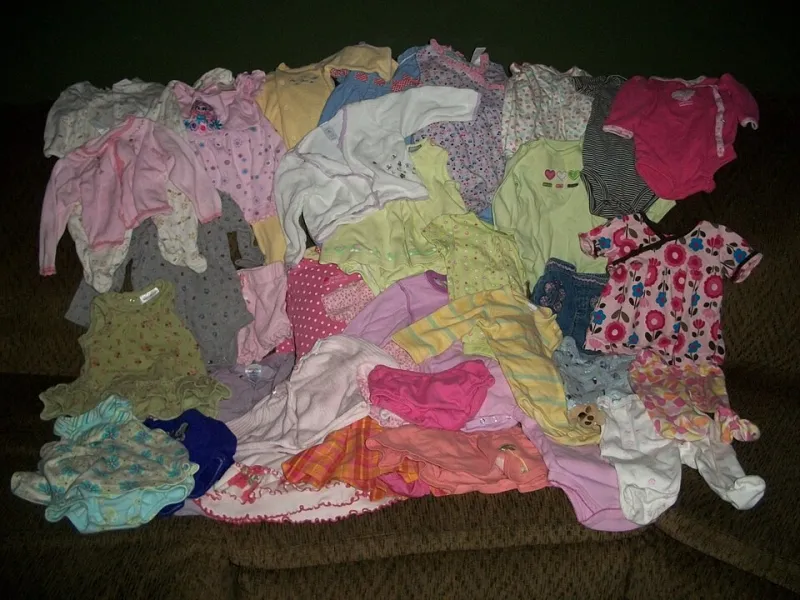
Photo: ParentingPatch, CC BY-SA 3.0, via Wikimedia Commons
The line forms before the doors open on a Saturday in Capitol Hill. Not a mob — a dozen people, tote bags folded under arms, coffees in hand, all doing the same casual-but-not-casual thing: scanning the front window to guess what came in this week.
Secondhand shopping has always had its devotees. What's different in 2026 is the scale. Resale is now one of the fastest-growing segments of retail in the country, and Denver — a city with a strong thrift infrastructure, a young population, and a well-earned reputation for dressing like it might go hiking — has become a reliable test market for the whole thing.
What a boom looks like on the ground
It looks like nonprofit thrifts with new donation drop-off hours and lines at the register. It looks like vintage booths rented by the square foot inside antique malls from Arvada to Aurora. It looks like consignment shops that will not take your bag of clothes unless they're the right brand, in the right season, in the right condition, and even then only maybe.
And it looks like pricing that would have caused a scene five years ago. A used flannel at $38. A worn-in denim jacket at $95. A 1990s crewneck with a mountain logo, marked up because somebody on the internet decided that logo is having a moment.
"People come in and say, 'this is thrift store pricing,' and I have to explain that it isn't, and hasn't been, for a while," said the owner of a small consignment shop in Baker who asked me not to name the store because she's mid-lease negotiation. "I'm paying rent on Broadway. The rack is my real estate."
The skimming problem
The economics of secondhand have always relied on a simple inefficiency: good stuff showed up by accident, and whoever walked in first got it. That inefficiency is dying.
Professional resellers now work the donation stream with spreadsheets and barcode scanners. Some of them have relationships with thrift staff. They arrive at opening, sweep the racks for brands with reliable online sold prices, and list the items within hours. Estate sale operators run presales. Storage-unit auctions went digital years ago.
The result, several shoppers described independently, is that the top tier of donations rarely hits a local rack at all. It goes straight to a listing platform, where it sells to a buyer in Ohio for a price a Denver shopper would have balked at.
"You used to find one great thing a month," said Marcus, a schoolteacher who has been thrifting in Denver since college. "Now I find one great thing a season, and half the time it's something a reseller missed because the label was faded."
The thrift stores are not the bad guys here
Worth saying plainly: the big nonprofit thrifts are not quietly hoarding the good stuff. Their mission is revenue for programs, and they sell what the market will bear like anyone else. Some have moved to boutique-style sections with higher prices and color-coded tags; others have leaned harder into outlet-style bins where inventory moves fast and cheap.
What's changed is the demand curve. When everyone under 35 decides secondhand is cool, and simultaneously a global platform decides it's a sourcing channel, the same pile of donated sweaters has to serve both a person who needs a $6 coat and a person who wants a $60 one.
Who gets the good stuff
This is the uncomfortable part of the boom, and nobody working in the sector wanted to say it on the record without hedging.
The people who benefit most from the current moment are those with time, transportation, and market knowledge — the ones who can hit three shops on a Tuesday morning, recognize a mid-century label, and price it. The people who benefit least are the ones who shop secondhand because it's the only option, and who now find thinner racks and higher tags at the store closest to the bus line.
Several shop owners pushed back on the idea that resale has abandoned its roots. One pointed out that nonprofit thrifts still process enormous volume at low price points, and that the curated boutique and the donation bin are not in the same business even if they share a supply chain. Another argued that resellers do useful work — they sort, clean, photograph, and distribute clothing that would otherwise be landfilled.
Both things can be true. The sorting is real. So is the squeeze.
The local shops holding a line
Meanwhile, the Denver stores that have built actual communities around resale are doing something the platforms can't: they know their customers. Buyers who bring in a bag, sellers who come back to check the rack where their old jacket ended up, a Saturday crowd that treats it like a neighborhood ritual.
That's the part of secondhand that survives the boom — not the chase for a grail piece, but the loop of a city's clothes moving around inside it. Denver's resale economy is still, at its best, a redistribution system with a personality.
The question is whether the next five years leave room for the person who just needs a coat.